The calendar is a red and white crisscross. A senior living facility manager pouts. She has the residents. She has the beds. But she doesn’t have the hands. This is a silent epidemic scene. It is paralyzing the American health care.
This decade has over one million shortage of direct care workers. The turnover rates can be more than 60. It is evident that the ancient play book has lost its effectiveness. So, what happens next? The solution is a chaotic, creative fumble outside of mere remuneration increases.
The Paycheck Is Only the Beginning.
Yes, it must be competitive wages. A large number of CNAs continue to be paid almost poverty wages. Their other sectors would allow them to earn more without being stressed. But money alone isn’t the cure. The real issue runs deeper.
This is a physically violent work. It is also emotionally exhausting. Most of the workers are made to feel unnoticed and dispensable. They do not have clear ways of progress. This triggers the burnout and move out cycle. We should repair the work and not the salary.
A Worldwide Search of Compassion
Panicked providers are now searching way out of their zip codes. The international recruitment is on the boom. The agencies are working hard to attract qualified caregivers to the country, especially in countries such as the Philippines and Nigeria. This bridges all crucial gaps within a short time.
However, this is an ethically complicated solution. Is it justifiable to hire employees in nations that require their own professional labor force? Moreover, these new caregivers require strong support. They experience visa obstacles and cultural shock.
I was informed by one CEO that they are not merely importing labor, but assimilating new members of the community. This requires deliberate work and profound cultural competency education. Otherwise, we will end up developing a new underclass in Elder Care.
“We are not importing people to work; we are assimilating members of the community.”
— Senior Living CEO
Earn and Learn Your Way to Career
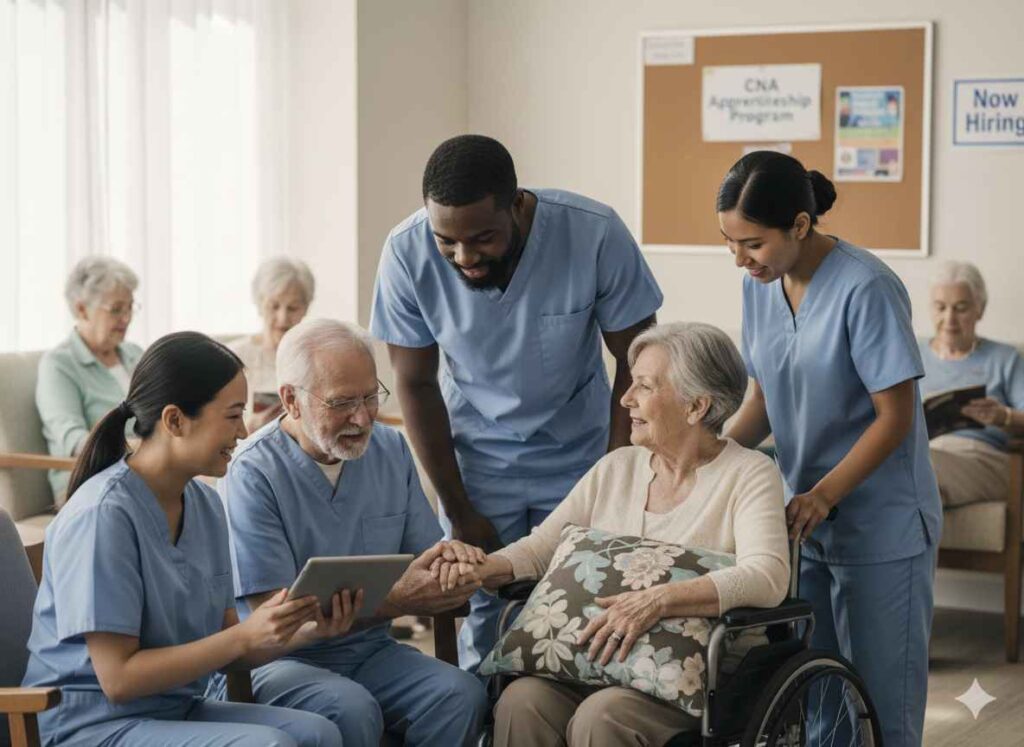
Would a CNA position be a stepping stone, rather than a dead end? This is being realized through apprenticeships. These models are earn-as-you-learn models. They pay trainees and they acquire skills under the tutelage of experienced mentors.
Oxygen-blown results were very beautiful in a community in Ohio. Their CNA apprenticeship reduced their turnover by 60 to less than 25 percent. Graduates were feeling appreciated and competent. A future in health care was before them. Loyalty and quality are created at the same time through this model.
It turns the profession into a skilled, worthy trade. Such a mental transformation is strong. It establishes a long term pipeline of the whole Elder Care industry.
Tech to the Rescue?
Is an algorithm really going to be helpful with a human heart? The goal isn’t replacement. It’s empowerment. The new technologies will be used to manage the administrative load. This leaves the caregivers to do what they do best: connecting.
“The data is dealt with by the tech, and the people can be dealt with by my team.”
— Director of Nursing
As a case in point, intelligent sensors may check the movement of residents. This minimizes mad room searches. Basic computerized assistants reduced charting time significantly. One of the facilities noted a two-hours-per-caregiver-per-shift saving. Two hours of more time to talk and attend to.
A Real-World Case Study: The “Green House” Model
We shall take a concrete instance. The Green house model is an innovative way of seniors living. It substitutes massy buildings with scaled down residential houses. Both have a regularly self-organized group of universal workers known as Shahbazim.
These employees are cross trained on cooking, cleaning and self care. They develop strong long-term bonds with the ten or so tenants. The results? In a study by 2018, there was a drastic increase in job satisfaction. The number of employees that left their positions was reduced greatly compared to the old nursing homes.
This is an effective argument in this model. Everything depends on the work environment structure. When you provide CNAs with increased autonomy and relationships, they remain.
The Gateway of Nursing Programs
We must also look upstream during the crisis. Community colleges nursing programs are important feeders to the Elder Care workforce. However, they are usually financially undermined and flooded with applications.
The most important are strategic partnerships. Progressive Elder Care providers have today become funders of scholarships. They are not only offering clinical rotation locations but also covering tuition of the students. Graduates in turn agree to work in the facility at a given time.
This isn’t just charity. It’s smart business. It guarantees a supply of mission-oriented new CNAs with high quality. It constructs a direct connection between learning and work. This reinforces the whole health care ecosystem.
The Unseen Emotional Toll
We hardly ever talk about deep sorrow experienced by CNAs. It is not only that they are helping strangers. People they have grown to love are leaving, time and time again. This accrued emotional harm is astounding.
This is without support resulting in compassion collapse. Real mental health resources must be incorporated by the providers. This will involve availability of counselors and peer support groups. We should not disrespect their hearts more than their hands.
One of my caregivers told me, We are the last to be held by the hand, to be told a secret. That is a privilege. But it is a burden we bear all our lives. The recognition of this is the initial step of healing our healers.
The Bottom Line
There is no magic bullet in the solution of the CNA crisis. It’s a multi-front war. We should have ethical hiring, career ladder, intelligent technology, and empathy. All of it matters.
We are at a crossroads. In the meantime we are able to use provisional patches. Or we can create a system, which respects dignity of both the care-giver and the care-taken. This decision brings the future of Elder Care. The future of our own, one of us, is literally in our getting it right.